Archaeological Excavations
Dive into the secrets of Homburg Castle: Discover surprising archaeological finds and the true history of its magnificent garden.
The archaeological investigations in the core area of Homburg Castle in 1999 and the exterior facilities between 2004 and 2009 have provided fascinating new insights into the history of the castle complex. For the first time, it could be proven that the origins of the castle date back to the 11th century. This is evidenced by the remains of a round residential tower made of stone – a so-called dungeon – which can definitely be dated to the year 1070. Round towers of this kind are extremely unusual for the region, as they are mainly found in the north and east of Germany.
While it was previously assumed that the area around the „Wittgensteiner Haus“ was undermined by deep vaults, the researchers already encountered solid rock at a depth of 30 to 80 centimeters. Another surprise was the square of walls on the north wall, which had previously been interpreted as a hearth, but turned out to be a chimney from the 18th century. The discovery of five post pits hewn into the rock, the purpose of which is still being researched, adds another layer to the riddle of the past.
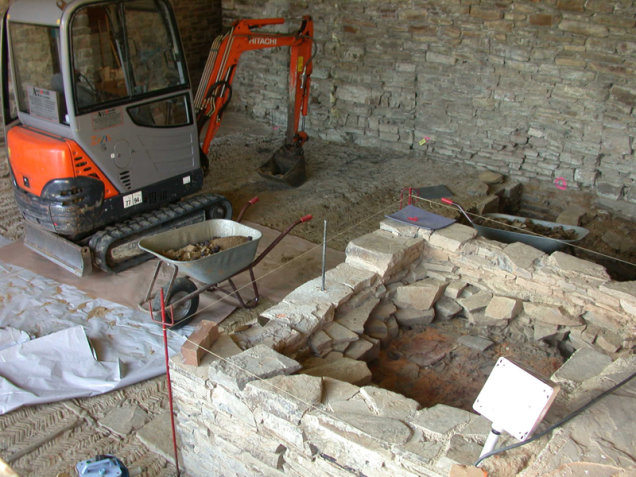
Insight into the Early History of Homburg Castle
The archaeological investigations in the core area of Homburg Castle in 1999 and the exterior facilities between 2004 and 2009 have revolutionized our understanding of the castle complex. The discovery of the remains of a round residential tower, a dungeon, indicates an early settlement of the area around the year 1070. The characteristic round construction of the tower, an architectural rarity in the region, may reflect the exchange or migration of building styles across medieval Germany. The significance of this structure goes far beyond its foundations and invites us to explore the diverse cultural influences that shaped the castle over the centuries.
In further excavations in the area of the „Wittgensteiner Haus“, the expectations of the archaeologists were again exceeded when they found solid rock at a relatively shallow depth instead of the expected vaults. This detail, as banal as it may seem, changes the assumptions about the construction and the foundation of the building and provides information about the methods and materials used for construction and renovation over the centuries.
Secrets in the Stone
The square of walls on the north wall of the castle, once considered a hearth, turned out to be a chimney from the 18th century upon closer examination. This find establishes a connection to the everyday culture of the castle's inhabitants at the time and provides valuable clues about the lifestyle and social structures of this era. Even more mysterious are the post pits hewn into the rock – five depressions whose function puzzles archaeologists and can be seen as harbingers of more exciting discoveries.
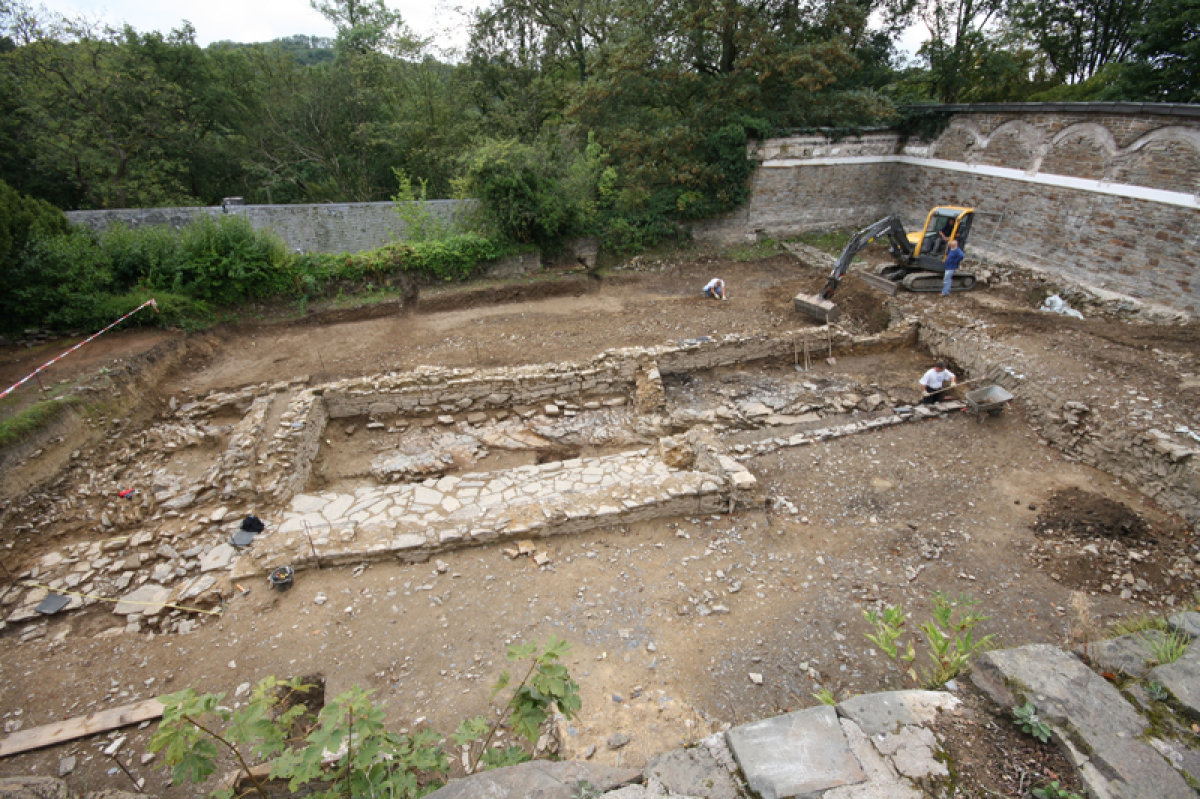
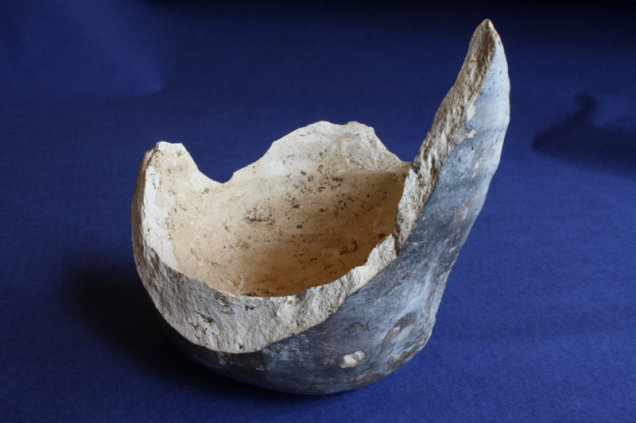
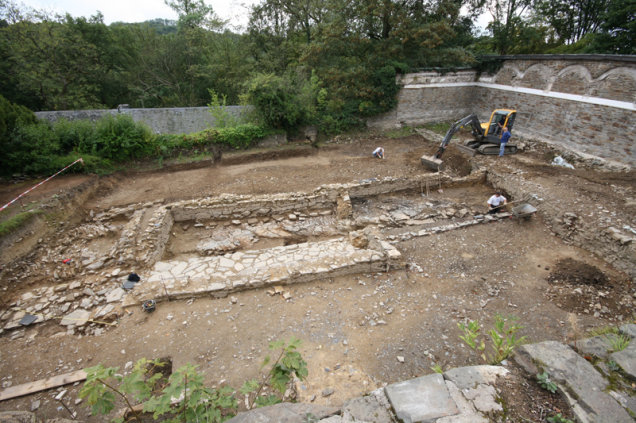
The pictures of the archaeological works from 2007 and 2010 show the careful uncovering of these treasures, with every brushstroke and every shovel of earth contributing to unveiling the secrets of Homburg Castle piece by piece. A fragment of a cup tile, an everyday object from the 11th century, was discovered, as well as the traces of the Baroque garden, whose layout now has to be dated much earlier than previously assumed.
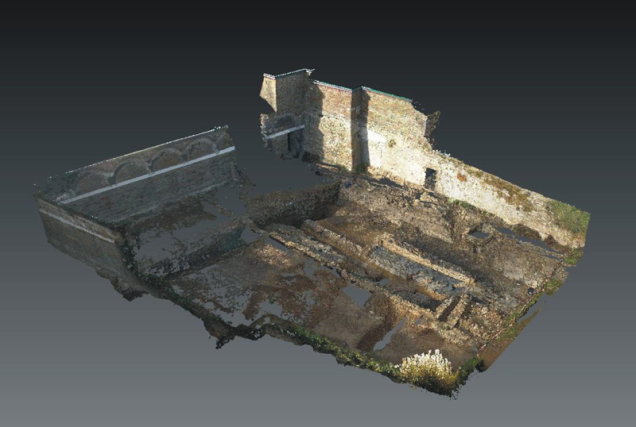
The comprehensive documentation of the excavation site, captured in an aerial photograph from 2009, offers an impressive overall view of the historical stratifications and is testament to the extensive efforts that were made to research and preserve the history of the castle. Each of these images tells its own story, adds its own note to the rich historical fabric of Homburg Castle, and enriches our understanding of the past of this unique place.
These detailed considerations underscore the importance of each find and every research effort that contributes to completing the comprehensive picture of the history of Homburg Castle and preserving it for posterity.
The Baroque Garden – a Historical Misunderstanding
The previous assumption that the „Baroque Garden“ dates back to the Baroque period was refuted by the archaeological excavations. It turned out that the plateau was laid out much earlier, which fundamentally changes our view of garden art and historical landscape design at Homburg Castle. This knowledge leads to exciting considerations about how the landscape design of Homburg Castle has evolved over centuries, long before the Baroque aesthetic exerted its influence.
Undiscovered Chapters
A Look into the Depths
The excavation pictures, from detailed close-ups of the finds to large-scale overviews of the excavation site, convey the scope and depth of the archaeological research at Homburg Castle. Each image documents the tireless search for answers, carefully rolling back the layers of the earth to give us insight into long past times. The commitment of the archaeologists and the modern technology used for documentation and analysis show how the puzzle pieces of the past are put together to form a complete picture of the historical truth.
Digital Archaeology – Insights into the Excavations
The use of modern technologies such as aerial archaeology allows for a new dimension of knowledge. The overall view of the excavation site from a bird's eye view, captured by advanced imaging techniques, offers a comprehensive view of what was once hidden. This technique not only helps to identify the outlines of past buildings, but also facilitates the planning of further research work and makes a significant contribution to the protection and preservation of the historical heritage.
Through the expanded elaborations and the integration of the new information from the photos, the text becomes more comprehensive and conveys a more vivid picture of the archaeological activities and discoveries at Homburg Castle.
Documentation „Under Ground“
The documentary „Under Ground“ created by Miriam Jacobs and Gerhard Schick provides a deep insight into the execution and results of the excavations. The film not only illuminates the building history of Homburg Castle, but also the significance of the individual finds, which shed new light on the multifaceted history of the castle complex.